Beaches · Costa Brava
The best beaches and coves of the northern Costa Brava
Wild rock coves on Cap de Creus, sheltered sand in Roses and Llançà, and kilometres of dunes around the Bay of Roses: a different swim for every day of the week.
The best beaches of the northern Costa Brava come in two moods. North of Roses, the Cap de Creus peninsula breaks into rocky coves with startlingly clear water, many reached only on foot or by boat. South of it, the Bay of Roses opens into long, shallow, sandy beaches. From Peralada the coast is about 20 minutes away, so a week here can include both.
Cap de Creus Natural Park: the wild coves
Cap de Creus is the easternmost point of mainland Spain, where the last foothills of the Pyrenees plunge into the sea. Created in 1998, it was Catalonia's first natural park to protect land and sea together: almost 13,900 hectares, more than 3,000 of them marine. The Tramuntana has eroded its rocks into fantastical shapes; around the cape itself, keep to signposted paths.
Cala Culip and Cala Portaló
Cala Culip, the last cove before the tip, is one of the park's most beautiful unspoilt inlets, once a natural harbour for Greeks and Romans. Walk in from the Pla de Tudela area, and bring a mask for the seabed. A short walk from the lighthouse, Cala Portaló is a small inlet that winds slowly inland.
Cala Montjoi and Cala Jóncols
On the Roses side, a coastal road serves the two coves easiest to drive to. Cala Montjoi, about 12 km from Roses, is a wide 270-metre cove of coarse sand and pebbles, best known as the former site of Ferran Adrià's elBulli; its water deepens quickly, which suits boats and divers. The road ends beyond Cap Norfeu at Cala Jóncols, a pebble cove with a steep drop-off recommended for scuba diving.
Cala Taballera
Remotest of all, Cala Taballera, near El Port de la Selva, is a pebble cove at the end of a long inlet, reached along the GR 11 trail on foot or by boat.
Beaches near Roses: Canyelles, L'Almadrava and the town beach
South of Cap Norfeu, as the Costa Brava tourist board puts it, "another Costa Brava begins". Canyelles Petites and L'Almadrava, 3–5 km from the centre, are fine-sand beaches sheltered from the Tramuntana, with lifeguards and pedalos; Almadrava also rents kayaks. In town, Rastrell, the widest beach on the promenade, has golden sand and shallow, clear water, and Roses describes it as ideal for families.
Llançà and El Port de la Selva beaches
About 15 minutes from the villa, Llançà is the quickest run to the sea. Platja del Port, a Blue Flag beach of coarse sand by the harbour, is the launch point for kayaking and windsurfing. Grifeu, towards Colera, is the fine-sand option, with lifeguards and a large free car park, though it is often very busy. Cau del Llop is small and enclosed by rocks, but shelves steeply.
Round the headland, El Port de la Selva lists more than thirty beaches and coves; its central Platja Gran is a Blue Flag beach suited to families.
The Bay of Roses: Sant Pere Pescador, Empuriabrava and the Aiguamolls
The bay's fine sandy beaches run for more than 15 km and are known for shallow water. Sant Pere Pescador has the longest: 6.3 km backed by gently sloping dunes, with areas reserved for windsurfing and kitesurfing and an annual round of the windsurfing world championship. Empuriabrava, beside what is considered Europe's largest residential marina, has a Blue Flag beach with a wide promenade and a children's playground.
For a different day, the Aiguamolls de l'Empordà Natural Park, protected since 1983, lies behind the bay. More than 300 bird species have been recorded in its wetlands; hides and signposted routes start from the El Cortalet centre, and early morning and dusk in March, May and August are the best times. Cyclists, see our cycling routes around Peralada.
Snorkelling, kayaking and boat trips
The park has marked snorkelling itineraries at Cala Murtra (Roses), Caials (Cadaqués) and Tamariua (El Port de la Selva), and swimming, diving and kayaking are allowed throughout, except in the S'Encalladora marine reserve. Guided kayak-and-snorkel outings run in the bay of Llançà with park-accredited guides. Sightseeing boats leave Roses for the coves beyond Cap Norfeu and on to Cadaqués; boats from El Port de la Selva and Cadaqués moor at Taballera. The Bay of Roses also hosts international dinghy regattas all year round.
Beach guide at a glance
| Beach / cove | Area | Type | Access | Best for |
|---|---|---|---|---|
| Cala Culip | Cap de Creus | Rocky cove | On foot | Snorkelling |
| Cala Taballera | El Port de la Selva | Pebble cove | Foot, boat | Hikers, boats |
| Cala Montjoi | Roses | Sand, pebbles | Car, foot, boat | Diving, boats |
| Cala Jóncols | Roses | Pebbles | Car, boat | Scuba diving |
| L'Almadrava | Roses | Fine sand | Car, bus | Families, windy days |
| Platja del Port | Llançà | Coarse sand | Car, foot | Kayaking |
| Grifeu | Llançà | Fine sand | Car, bus | Families |
| Sant Pere Pescador | Bay of Roses | Sand, dunes | Car | Wind sports |
| Empuriabrava | Bay of Roses | Fine sand | Car, foot, bus | Families |
Rock in the morning, sand in the afternoon: on this coast the wind chooses the beach, and there is always a good one.
Practical tips: Tramuntana, parking and the best months to swim
The Tramuntana
The Tramuntana is a strong, dry, cold northerly wind funnelled between the Pyrenees and the Massif Central. It is most frequent in winter, but it can pick up at any time. When it blows, skip the exposed north-coast coves beyond El Port de la Selva and head for shelter: Canyelles Petites and L'Almadrava in Roses, Canyelles beach in Llançà or the bay of Cadaqués. Windsurfers and kitesurfers head instead for Sant Pere Pescador.
Parking and access in high season
Every day in July and August, and on many weekends and holidays in spring and autumn, private cars cannot use the road from Cadaqués to the Cap de Creus lighthouse during the day; use the free Corral d'en Morell car park and the shuttle to Guillola, Tudela or the lighthouse. Roses restricts cars on the Montjoi and Jóncols road during the day in July and August, though walkers and cyclists can still go in. Check the park's access page before setting off; at the highest fire-risk level, access to the park is closed.
When to swim
Official monitoring at Llançà puts the average sea temperature at about 20 °C in June, around 22 °C in July and August and almost 21 °C in September, with the annual peak usually around 10 August. September is often the sweet spot: the sea is warmer than in June and the Roses car restrictions have ended.
Practical questions
Which beach is closest to Peralada?
Llançà is the quickest run from Villa Pax, about 15 minutes by car, with Platja del Port and Grifeu close to the village. Cadaqués and the Cap de Creus coves are about 30 minutes away.
What are the best coves in Cap de Creus?
Cala Culip and Cala Portaló near the lighthouse for unspoilt scenery, Cala Taballera for a walk-in or boat-in day, and Cala Montjoi and Cala Jóncols if you would rather drive.
Is the northern Costa Brava good for families?
Yes. The Bay of Roses has more than 15 km of fine sand known for shallow water, and Roses beaches such as Rastrell and L'Almadrava have lifeguards. Save the wilder coves, with their walks and steeper shelves, for older children.
After the beach: back to Peralada
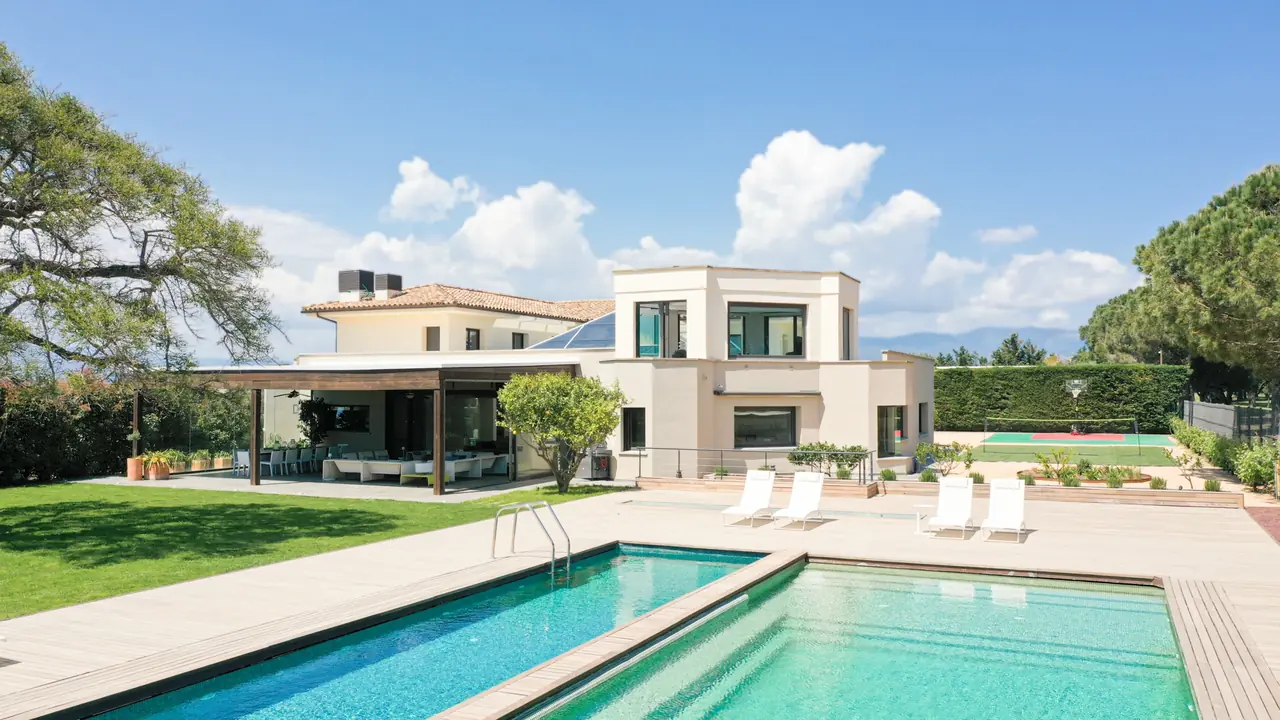
Back at Villa Pax on Golf Peralada, two private pools, a lap pool and a platform pool on a shared wooden deck, rinse off the salt. For more ideas, see things to do near Peralada, the medieval and coastal villages of the Empordà or our 7-day Empordà itinerary.
Planning a beach week on the Costa Brava?
Eight en-suite bedrooms for up to 15 guests and two private pools, 20 minutes from the coast.
Send an enquiry